Editorial team ·
What you should be able to find on an artist label
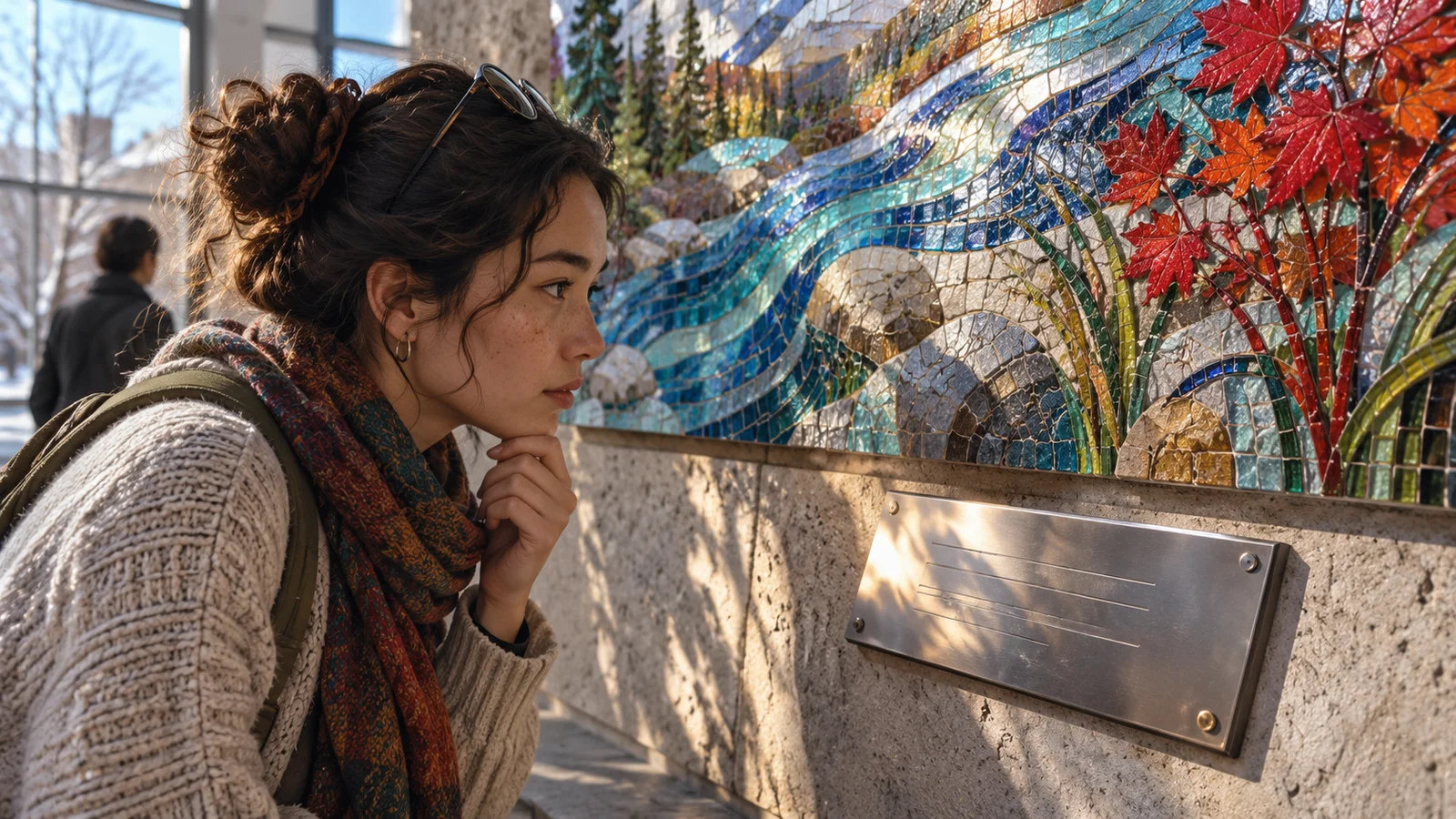
You stop in front of a mosaic and want to look it up at home. The plaque thanks the venue and gives a title, but you cannot immediately see who made it. Read each line for its role. A name by the title, a maker credit, and a thank-you line can carry different pieces of information.
Read the label before filling in the blanks
On the practice label, the title is River Wall. Morgan Lee is named as the artist, and a separate line names the studio that fabricated the panel. List both roles if they matter to the reader.
Check which date the plaque means. A panel can have a date for its design, installation, or later treatment. If the text says only “2010,” write “date listed as 2010” until you find an explanation.
Record the material as it appears. If the original label just says mixed materials, a photograph of the tiles may not identify the full combination. Look for an exhibition guide or project record before adding precision.
A useful note includes the words on the plaque and where you read them. Then, if a venue page or second plaque uses a different name, you can see which source supplied each detail.
| Field | Example | How to record it |
|---|---|---|
| Title | River Wall | Use the printed spelling |
| Artist | Morgan Lee | Keep the role label |
| Fabrication | River Studio | Record separately from artist |
| Date | 2010 | Check whether the label specifies installation or another event |
Questions and answers
- Does the studio always name the artist?
- Use the role on the label. A studio can be mentioned for fabrication or another part of the project.
- Should I copy the full plaque?
- Keep an exact short note for identifying details and a fuller reference if it is useful.
- What if I cannot see the small print?
- Ask the venue for a readable label or text copy.
Write a short record you can verify later
- Read the whole plaque
- Identify the title and any role labels.
- Note how dates and materials are described.
- Find a second source for open questions
- Ask for a venue or exhibition record.
- Avoid filling a missing role from a nearby acknowledgement.