Editorial team ·
New tile or original piece? Look for evidence of a mosaic repair
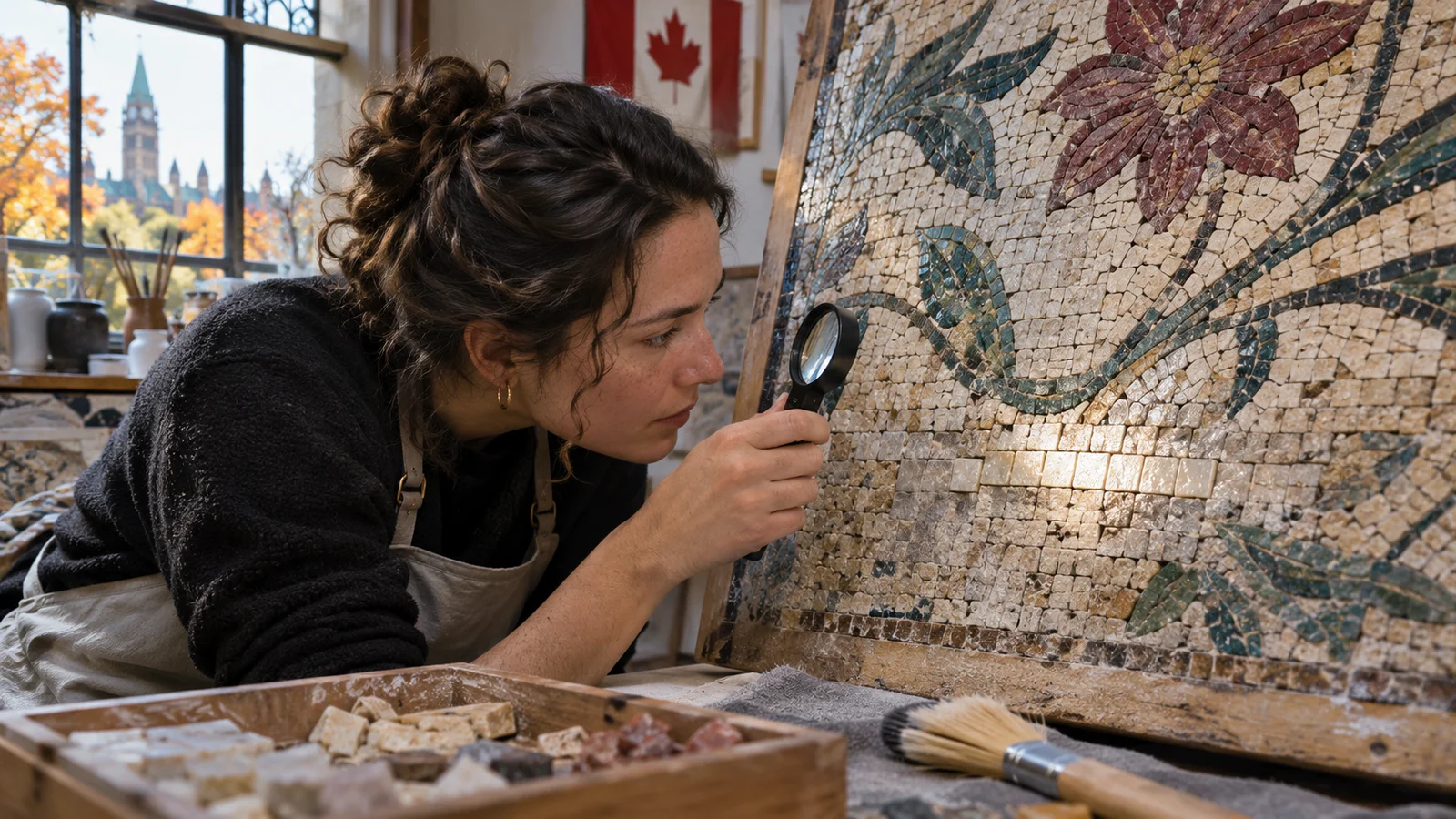
A small square is brighter than everything around it. It might be a replacement, a variation in the original pieces, or simply a tile catching light. The difference is worth noting. The history of that piece needs a second kind of evidence.
Describe the pattern and location you can see
| Clue | What you can say |
|---|---|
| Brighter row | Those pieces look brighter in this view |
| Regular squares | The shapes differ from adjacent pieces |
| Dated treatment diagram | Use it to identify the recorded repair area |
A tessera is an individual piece of a mosaic. In the imaginary example, a line of nearly identical squares sits within a patch of mixed sizes. A note can record the line and the change of size without assigning a date to it.
Look at the area from a permitted angle. Light, reflection and deposits can affect appearance. Compare several adjoining pieces and mark the patch on a sketch so another person can find it.
If the venue has a treatment note or dated image, match the boundary of the documented work to the patch. A note that says “lower edge treated” may establish work on the panel without identifying every changed piece.
For an article, use “visible patch of more regular pieces” until there is a supported identification. A published treatment diagram can make the distinction clearer if it marks that same area.
Use a dated source before naming a repair
- Mark the visible difference
- Write down where it appears.
- Describe colour, size or joins without guessing a date.
- Check the documentary record
- Match the patch to a dated source.
- State whether an individual piece can be identified.
Questions and answers
- Can a newer-looking tile be original?
- Appearance alone leaves its date open. Check a treatment record or earlier image.
- What if the new piece matches well?
- A documented repair may be hard to see. Use the record for its location if it gives one.
- Should I scrape or lift anything to check?
- Observe from the permitted area and leave examination of the material to the venue or conservator.