Editorial team ·
What the grout between mosaic pieces looks like up close
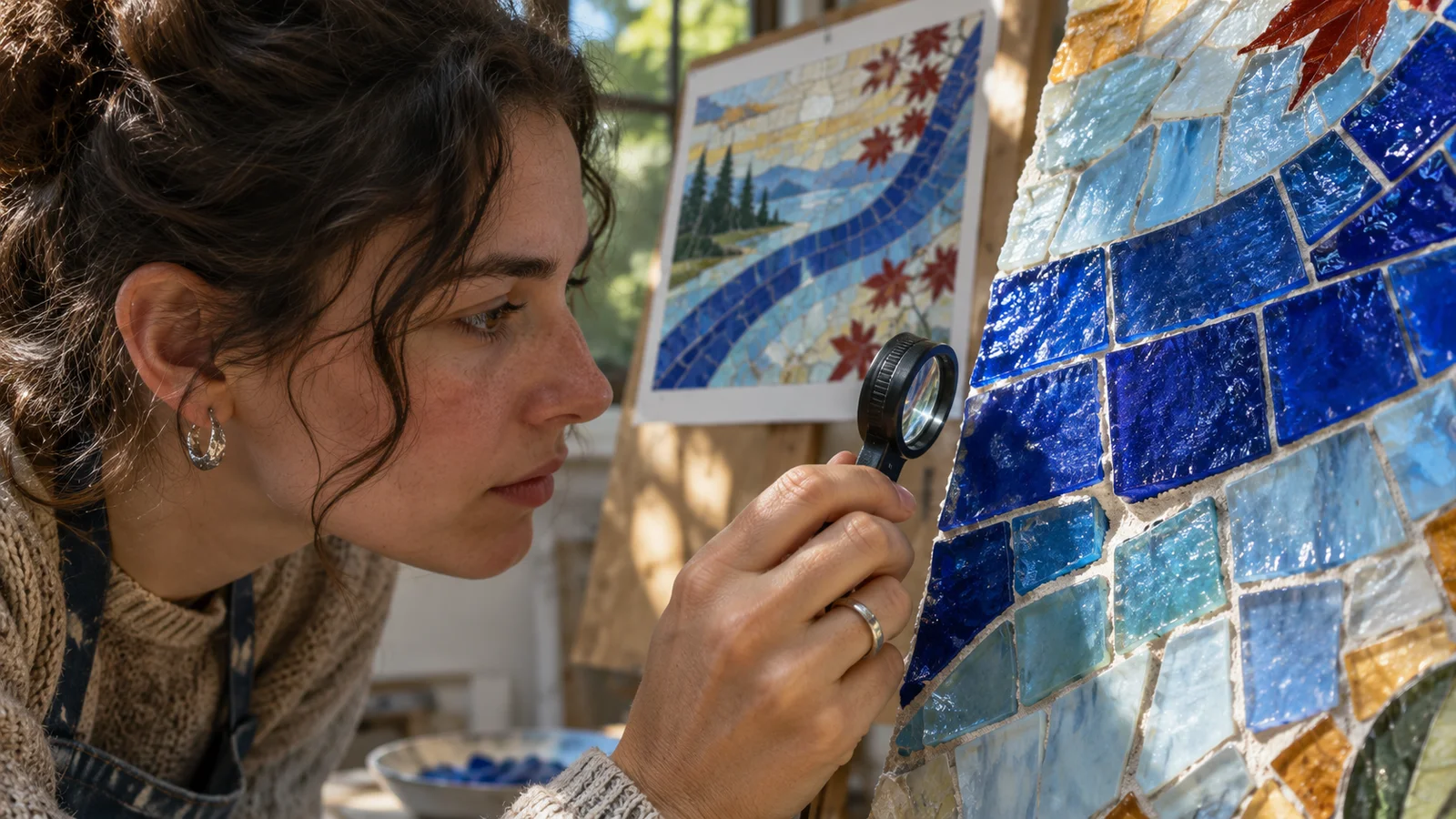
From across the room the mosaic looks like one solid blue band. Up close, pale lines separate the pieces, and one line widens beside an uneven square. Describe the join you actually see. A close-up can reveal those differences without telling you what the filling is made from.
Start with the visible join
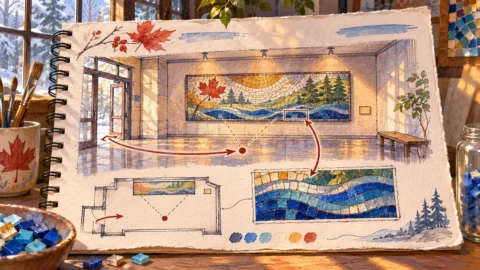
On the imaginary panel, the pale material between neighbouring pieces is narrow and flat in one spot. At the lower corner, the gap appears wider and recessed. Use a whole-panel reference or sketch so a reader can find both areas.
Check the direction of light. A shadow can make one side of a joint look deeper in a single picture. A view from another permitted angle helps you distinguish the visible shape from glare or shadow.
Keep the report descriptive. The picture may show a discontinuity or a different colour. To determine the composition, cause or date, look for a treatment or installation record. Do not pick at the join to see what lies underneath.
Pair the close-up with a caption that names the location and any useful scale. “Lower left, beside the dark-blue strip, seen under side lighting” is enough to anchor the observation.
| Area | Visible appearance | What the image leaves open |
|---|---|---|
| Middle of blue band | Narrow pale join with level-looking surface | Material and date |
| Lower corner | Wider line with a recessed-looking patch | Depth and cause |
Questions and answers
- Can I identify grout by colour?
- Several materials can have similar colours. Use the label or a conservator’s record for a material claim.
- Does a dark line prove a crack?
- Check another view and describe the shape. A shadow or deliberate join can also look dark.
- Should I use a close photo when reporting a concern to the venue?
- Use one if photographs are allowed and give the location. Leave the physical assessment to staff.
Compare two areas before describing a condition
- Locate the detail
- Record the patch within the whole mosaic.
- Describe its visible width and colour.
- Compare a second view
- Check whether shadow changes the appearance.
- Use documentary evidence for treatment claims.