Compare mosaic materials in daylight and under venue lights
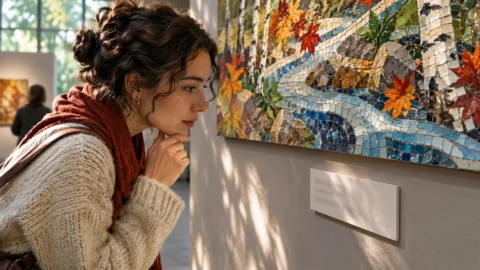
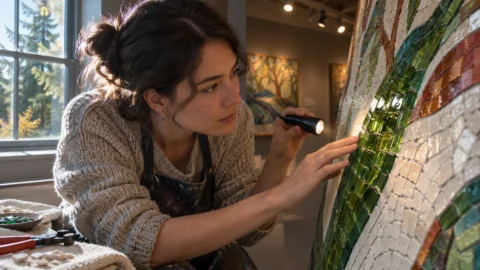
Look at the same area of an imaginary mosaic in two kinds of light. Describe reflections and texture while keeping unverified material identifications open.
Look at the same area of an imaginary mosaic in two kinds of light. Describe reflections and texture while keeping unverified material identifications open.
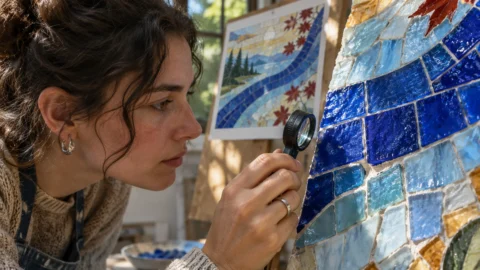
Use a close photograph to describe the colour, width and shape of joints. Learn what an image can show and when a treatment record is needed.
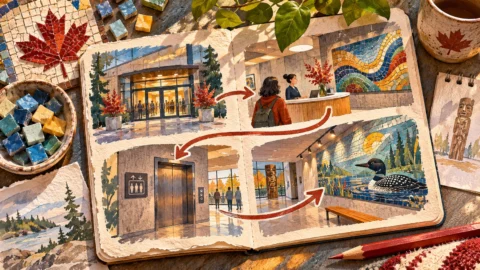
Give an imaginary art walk a starting door, useful landmarks and viewing points. Check access and give readers alternatives when a room is closed.
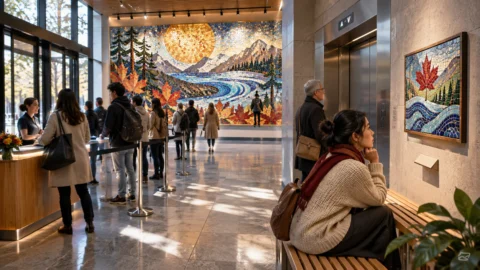
Compare two imaginary artwork locations by the moment visitors first see them, where they can pause and whether the label fits the approach.
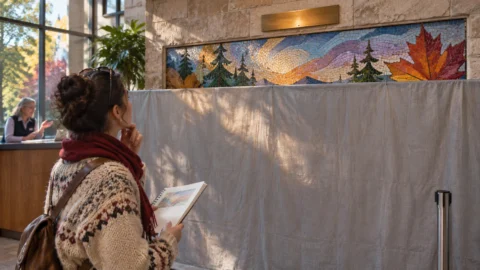
Describe how much of a mosaic is obscured, record any notice the venue has issued, and separate the present view from earlier photographs.
Compare three names on a fictional mosaic plaque. Attribute the artwork to the source that names its creator, and record the loan or commission separately.
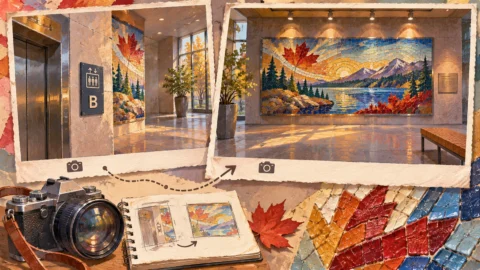
Use an imaginary venue visit to choose a permitted camera position, record the approach, and pair the first view with a detail that explains the work.
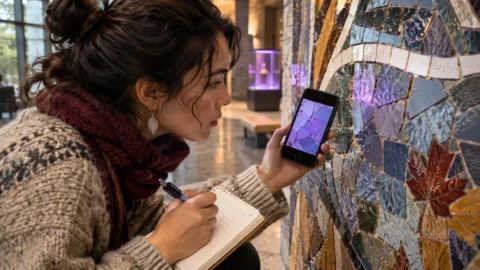
Record colour in words and compare the same tile under known lighting. Keep automatic processing and unmeasured colour separate from the observation.
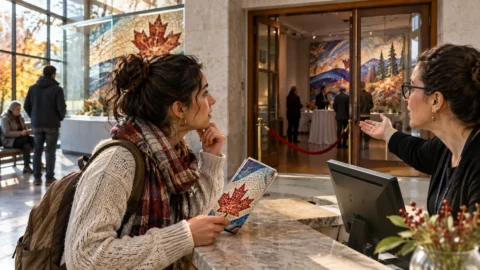
Find the viewing hours for a specific work, including the entrance and any appointment or ticket required. Use a short practice note for the visit day.
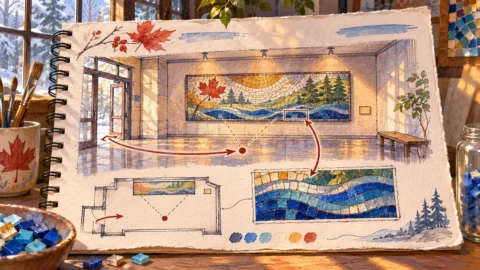
Draw a simple visitor’s sketch. Mark the panel, doorway, plaque and viewing positions so the drawing can explain how the work sits in the room.