Editorial team ·
How light changes the edge of a tile without moving the panel
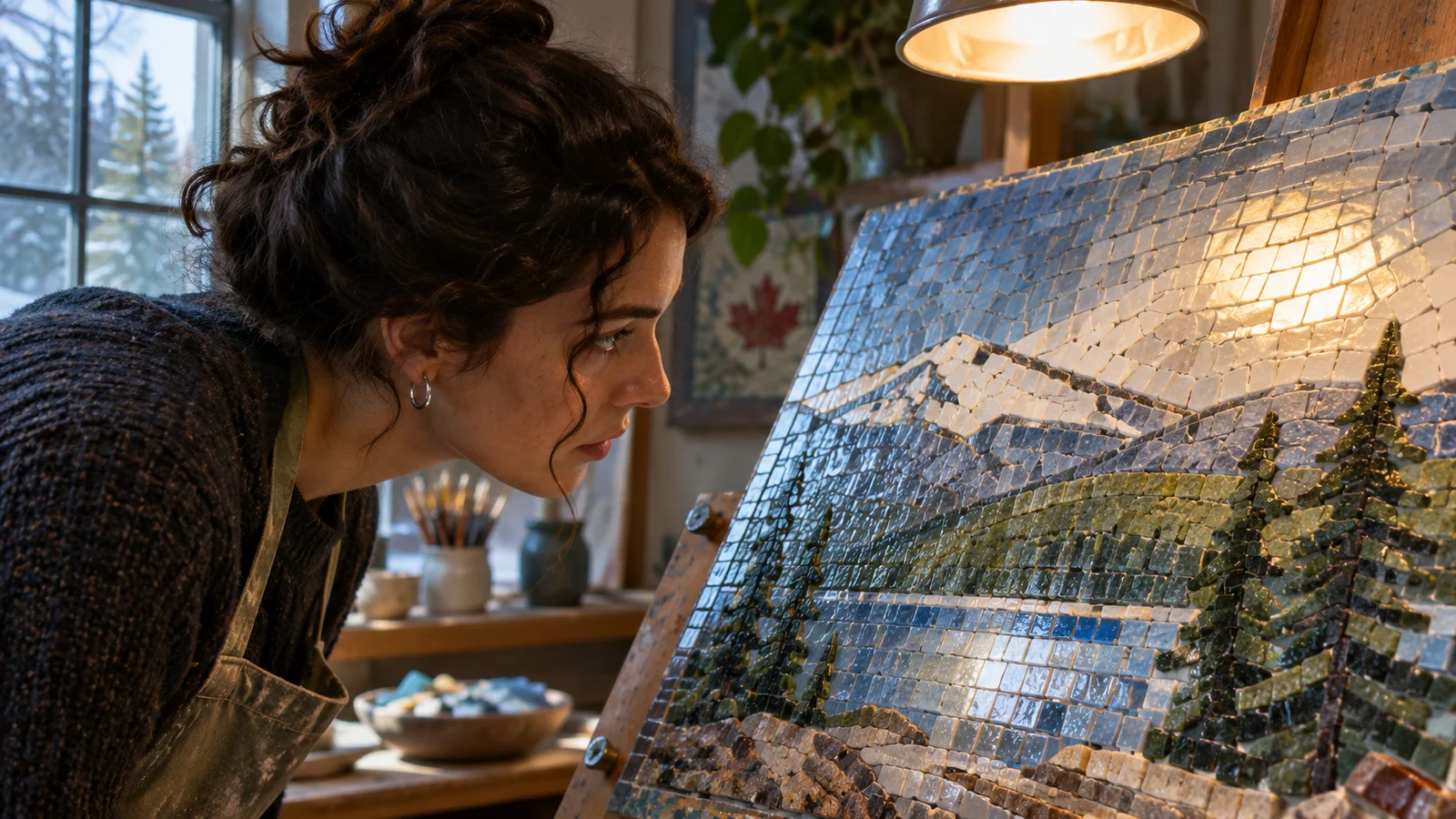
A row of pale tiles looks sharp in the morning. Later the same boundary disappears in the reflection from a ceiling light. Before writing that the edge has worn away, try a second viewing position. Lighting can change what you are able to see in a single visit.
Check the direction and reflection
| Viewing condition | What is visible |
|---|---|
| Side daylight | Raised edge and narrow shadow |
| Overhead light from first position | Reflection covers part of the same edge |
| One step to the side | A larger part of the edge can be seen |
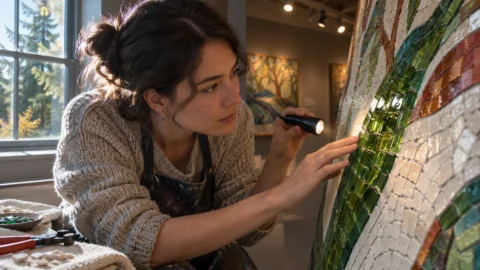
In the practice panel, daylight from the left makes a ridge visible along one row. Under the ceiling light, a reflection crosses the same row. A step to the side, from the permitted viewing area, changes where the bright patch appears.
Look at one small section and remember its location. If two tiles are partly hidden by reflected light, describe that rather than trying to reconstruct an edge from the parts you can see.
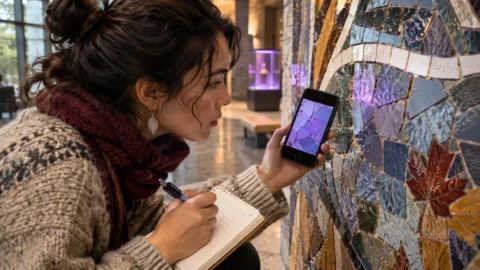
If photography is permitted, keep one view from each of the two positions and note the conditions. A darker photograph may be caused by the camera exposure as well as by the light in the room.
Leave questions about material condition for a person who can examine the work. Your comparison can be valuable as a record of what was visible from the public route.
Write down how you made the comparison
- Choose the same detail
- Identify a tile or join you can find again.
- Note the light and the place you stood.
- Change the viewing position
- Compare the edge with the earlier view.
- Record glare, shadow and anything still obscured.
Questions and answers
- Does glare indicate damage?
- Glare describes the light you see. Check another view before making a claim about the surface.
- Does a darker photo prove the room was darker?
- Record the lighting and camera settings where possible. Automatic exposure can affect the image.
- Should I touch the surface to check a ridge?
- Use approved viewing points and leave physical examination to the venue or conservator.