Editorial team ·
Photograph the mosaic from where a visitor would first see it
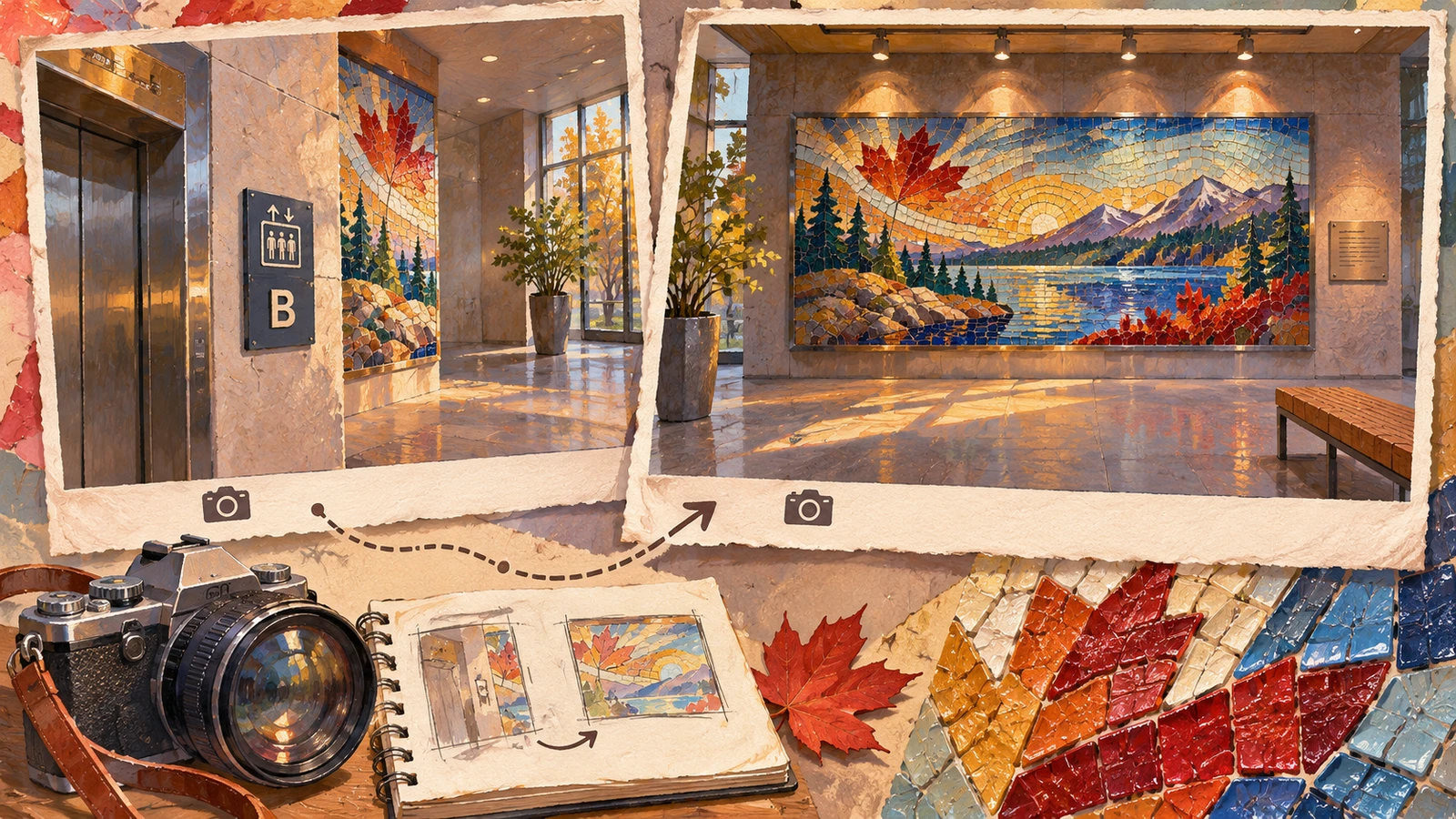
The venue’s publicity photo shows the mosaic straight on. As a visitor you first glimpse it beside a lift, half hidden by a wall. Try taking a permitted photograph from that point, then follow the normal approach. The pair helps a reader imagine seeing it in person.
Give the first picture a clear point of view
In the fictional lobby, the edge of the mosaic appears as you come out of Lift B. Include the nearby sign in the wide view if it helps explain where you are. Keep the public walking space clear while you take a photograph.
Move to the place where visitors can stand comfortably and see the whole panel. Photograph it from there if the rules allow. Note the two camera positions and any difference in lighting or framing.
Avoid including recognizable visitors when they are unnecessary to the story. If a line or group fills the view, wait for a clear moment or write down what was visible instead.
Write simple captions: the first names the point of arrival, the second names the viewing area. Add an image of the plaque only where it is allowed and gives the reader information they need.
| View | What to include | Caption detail |
|---|---|---|
| From Lift B | The wall edge and first visible tiles | Where the work enters view |
| From designated viewing area | The whole mosaic and nearby label | Which angle allows a full look |
Show what changes on the walk toward the work
- Choose permitted positions
- Check the venue’s photography rules.
- Start on the ordinary visitor route.
- Write two different captions
- Say where you stood and what you saw.
- Keep people out of the frame when possible.
Questions and answers
- Must I photograph the work straight on?
- Choose a useful context view first. A straight-on detail can help as a separate record.
- What if photos are restricted?
- Use a written observation or ask whether sketching is permitted.
- Should I zoom close from the doorway?
- A close view can be useful, but keep a wider shot or a note that locates the viewer in the room.